April Fool’s Day (1986): The Slasher That Isn’t (And That’s The Point)
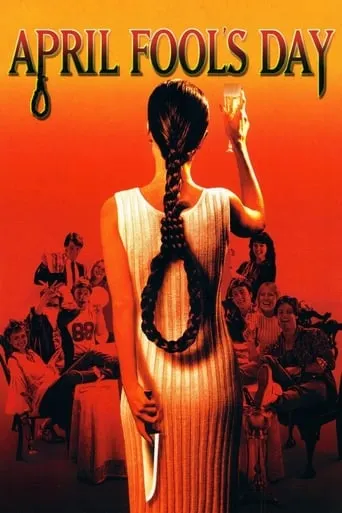
April Fool’s Day is a weird little movie that sits in this fascinating space where it looks like a slasher, acts like a slasher, and then pulls the rug out from under you in a way that’s either brilliant or infuriating depending on your tolerance for being messed with. For the record: we think it’s brilliant.
The setup is pure 1980s slasher: a group of college friends heads to a remote island mansion for spring break, hosted by the wealthy and increasingly unhinged Muffy. The house is full of creepy toys, jack-in-the-boxes, and unsettling vibes. People start disappearing. Blood shows up. Doors lock. All the pieces are there for a standard body-count movie, except April Fool’s Day has zero interest in being that movie.
What it does instead is commit to one of the most audacious fakeouts in horror history. The whole thing—every death, every scare, every moment of escalating terror—is staged. It’s all part of an elaborate prank Muffy is running to test out her concept for a murder mystery bed-and-breakfast. And somehow, against all odds, it actually works.
Part of why it works is that the movie is genuinely well-made. The direction is solid, the pacing keeps you engaged, and the atmosphere is legitimately creepy even when you know on some level that something’s off. The mansion itself is a perfect setting—isolated, full of weird details, and just unsettling enough to keep you on edge. There’s this constant sense that something isn’t quite right, which is exactly what the movie wants you to feel.
But the real MVP here is Deborah Foreman as Muffy.
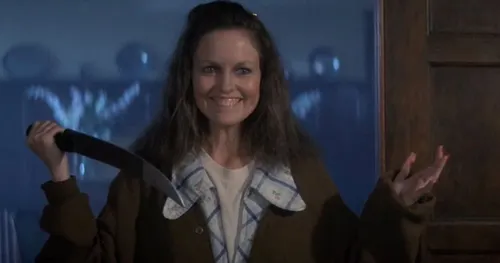 She’s doing double duty playing both Muffy and her supposedly evil twin Buffy, and she absolutely sells it. The performance is unhinged in the best way—you genuinely can’t tell if she’s dangerous, mentally unstable, or just fully committed to an elaborate bit. That ambiguity is what keeps the whole thing afloat. If you didn’t believe Muffy could actually be orchestrating something sinister, the movie would fall apart.
The rest of the cast is surprisingly strong too. These aren’t the usual interchangeable slasher victims; they feel like actual college friends with history and relationships.
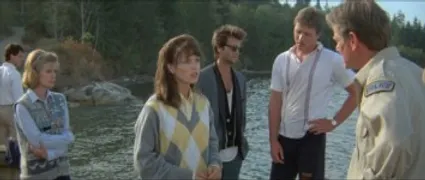
When they start turning on each other or piecing together what might be happening, it plays as genuine paranoia rather than just hitting genre beats. That groundwork matters because when the twist lands, you need to believe these people actually thought their friends were being murdered.
And that’s where April Fool’s Day gets interesting.
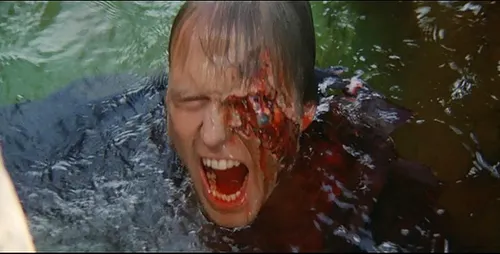
The movie is essentially a feature-length prank, not just on the characters but on the audience. You show up expecting a slasher, and what you get is a mystery-comedy that’s using slasher conventions as set dressing. Some people absolutely hate that. They feel cheated, like the movie lied to them. But if you’re willing to go along for the ride, there’s something genuinely clever about how it pulls off the trick.
The key is that the movie never breaks its own rules. Everything that happens could be part of an elaborate setup. The kills are offscreen. The bodies disappear. There are enough little inconsistencies that if you’re paying attention, you might start to suspect something’s up. It’s not cheating—it’s just withholding information in a way that lets the twist work. And when it finally reveals what’s been going on, it recontextualizes everything you’ve been watching in a way that’s actually kind of delightful.
There’s also something fascinating about April Fool’s Day as a piece of horror history. It came out in 1986, right in the middle of slasher oversaturation, and it’s basically a movie about being tired of slashers. It’s metatextual before Scream made that the default mode for horror.
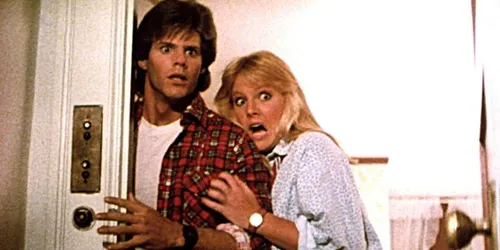
The characters are genre-aware, the movie knows what you expect, and it’s deliberately subverting those expectations not out of contempt but out of playfulness. It’s a movie that loves the genre enough to mess with it.
That said, Muffy is kind of a sociopath. Let’s not sugarcoat it. She orchestrates a weekend of psychological torture for her closest friends as a “test run” for a business concept, and the movie just plays it off as harmless fun. These people genuinely believed they were watching their friends get murdered, and Muffy’s just like “Surprise! Wasn’t that fun?” That’s deeply unhinged behavior, and the film never really grapples with how messed up that is. But in a weird way, that ambiguity makes it more interesting. Muffy’s not a villain, but she’s not exactly a hero either. She’s just a rich weirdo doing rich weirdo things.
The twist also gives the movie surprising rewatch value. Once you know what’s actually happening, you can go back and see all the little clues and misdirections. It’s not a movie that falls apart when you know the ending—it actually gets more fun because you’re watching the mechanics of the prank unfold rather than waiting for the scares.
Is it a perfect movie? No. The pacing drags in spots, and some of the red herrings don’t quite land. But it’s a movie that knows exactly what it’s doing and commits fully to the bit. It’s not trying to be the scariest slasher or the goriest kill-fest. It’s trying to be a clever subversion of the genre, and on those terms, it succeeds.
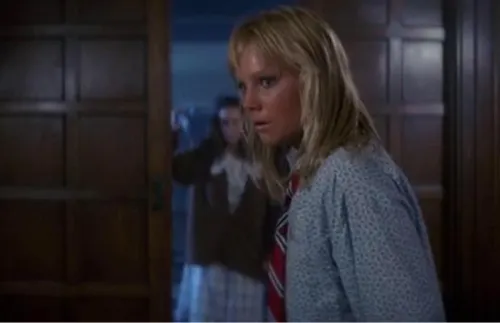
April Fool’s Day is a movie that rewards you for not taking it too seriously. It’s playful, it’s weird, and it’s got just enough genuine craft behind it to make the whole thing work. If you go in expecting a straightforward slasher, you might walk away disappointed. But if you’re open to a movie that’s more interested in messing with your expectations than delivering what you came for, it’s a genuinely fun time.
It’s a prank, but it’s a good prank. And sometimes, that’s enough.