Lake Mungo (2008): A Grief Documentary Disguised as Horror
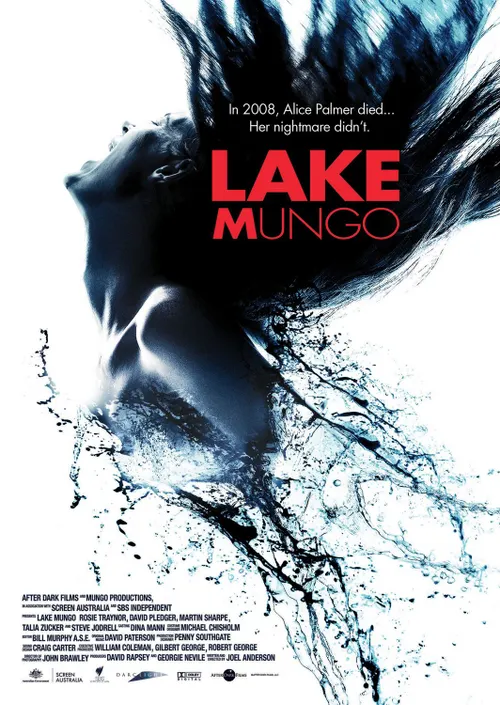
Let’s get this out of the way upfront: Lake Mungo is not a horror movie. At least not in any traditional sense. It’s a somber, slowly paced drama about grief wrapped in documentary format, with one genuinely unsettling moment buried somewhere in its 87-minute runtime that felt closer to four hours.
We know this is a controversial take. Jordan Peele apparently called this one of the scariest movies he’s ever seen, which makes us seriously question his horror movie credentials. Plenty of people online swear by Lake Mungo as a masterpiece of atmospheric dread. But if this is atmospheric dread, we must have been watching it in the wrong atmosphere - maybe one with significantly less oxygen, because we spent most of the runtime fighting to stay awake.
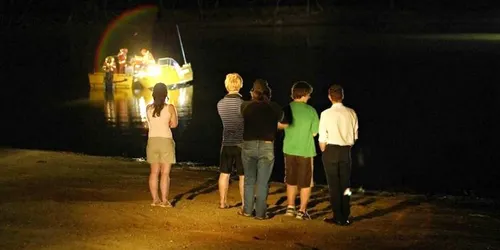
The film follows the Palmer family after their daughter Alice drowns while swimming with her family. It’s presented as a true-crime documentary, complete with talking-head interviews with family members, friends, neighbors, and various people tangentially connected to the case. The drowning seems straightforward - a tragic accident - but as the family grieves, strange things start happening in their home.
There are noises on the roof and outside Alice’s bedroom window. Her mother June has recurring nightmares where Alice appears at the foot of her bed, dripping wet and staring. Her father Russell sees Alice’s ghost in her bedroom one night - she’s sharpening pencils, checking her phone, and when he makes a noise, she turns and screams at him to get out. Her brother Matthew develops mysterious bruises all over his body that appear spontaneously and disappear just as quickly, with no medical explanation.
Matthew, who has a passion for photography, starts capturing what appears to be Alice’s ghost in photographs and video footage around the house. There’s a clear image of her standing in the backyard. She appears in the background of home videos. A man named Bob was down at the dam taking pictures and captured what looks like Alice’s figure in the distance - despite this being months after her death.
For June, this becomes a lifeline. She didn’t view Alice’s body when it was recovered because she couldn’t bring herself to do it, which left her without closure.
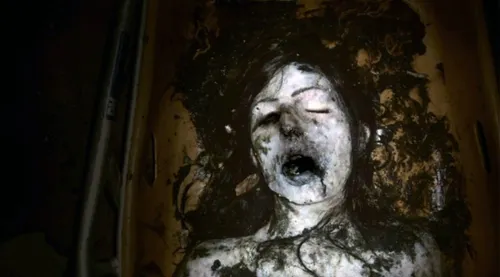
When Bob’s photo surfaces, she convinces herself that maybe Russell made a mistake identifying the body. Maybe Alice is still alive, just lost in the woods somewhere. They exhume the body to confirm - and yes, it’s definitely Alice.
Enter the psychic.
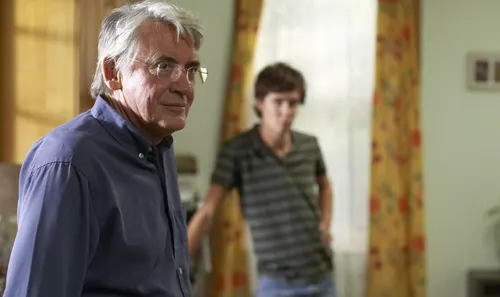
June hears a man named Ray on the radio and books a session with him. He has her close her eyes and visualize walking through her house, describing what she sees. She walks down the hall to Alice’s bedroom and sees her daughter sitting in a wicker chair, looking sad. June brings the psychic home to meet the family, and a few weeks later they hold a seance where absolutely nothing happens - or so they think.
Matthew reviews the footage from the seance and sees Alice’s image appear on camera. This leads the family to install permanent cameras running 24/7 throughout the house, which capture multiple ghostly appearances. The family feels hopeful again - their daughter is still with them in some way.
Then the Withers video surfaces. A couple was at the dam the same day as Bob, and their footage captures Matthew wearing Alice’s jacket. When confronted, Matthew admits he faked all the ghost evidence. He wasn’t trying to trick anyone maliciously - he did it because his mother was struggling so badly with Alice’s death that he wanted to give her something to hold onto, even if it was false comfort.
This revelation devastates the family, particularly June. The one thing keeping her tethered to her daughter turns out to be an elaborate lie constructed by her grieving son. But here’s where it gets interesting: while Matthew and the psychic are out of town on some tour, Russell and June review footage from the cameras that are still running. Neither of them has the technical skills to doctor video the way Matthew did. And they see Alice. She’s really there. The ghost is real after all.
Then they go back through Matthew’s original footage looking for authentic ghostly appearances among the fakes - and they find something else entirely. Their neighbor, sneaking into Alice’s bedroom, clearly searching for something.
June goes to Alice’s room and finds a small safe hidden in the fireplace. Inside is a videotape. On that tape: Alice at age 12-16, engaging in sexual activity with the neighbor couple she babysat for. The footage suggests this was not consensual - there’s crying, clear distress - but the way people in the documentary react to this revelation is disturbingly casual. Friends and even Alice’s boyfriend respond with “well, I guess she had her secrets” rather than appropriate horror at what is clearly documentation of child sexual abuse.
The neighbors, conveniently, sold their house and disappeared shortly after Alice’s death. The police can’t find them. This entire subplot feels like it was dropped in for shock value - it’s genuinely surprising and deeply uncomfortable, but it goes absolutely nowhere and has no resolution. Maybe it’s meant to represent Alice’s “unfinished business” keeping her spirit tethered, but that’s a stretch.
In Alice’s safe,
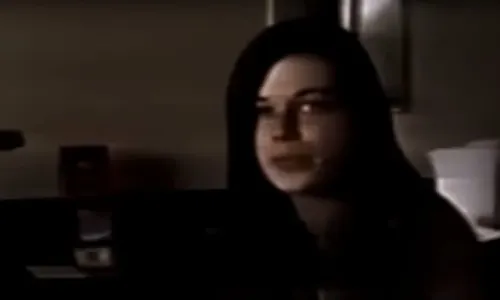
June also finds a business card for Psychic Ray - the same psychic the family hired. Turns out he’d met with Alice before her death but never disclosed this to the family. He claims psychic-client confidentiality, even posthumously, which is either deeply ethical or completely made up depending on your view of psychic legitimacy. Ray’s session with Alice was identical to June’s: visualize the house, walk through it, describe what you see. We don’t get Alice’s full account yet, but we will.
June reads an entry from Alice’s diary describing a nightmare where she felt cold, wet, and heavy. When she woke, the sensation didn’t fade. Frightened, she walked down the hall to her parents’ bedroom and stood at the foot of their bed - exactly mirroring June’s recurring nightmare, but from Alice’s perspective. Alice felt overwhelming sadness and fear, and realized her parents couldn’t help her. She felt utterly alone.
This is one of the film’s better ideas: the parallel experiences between mother and daughter, suggesting some kind of spiritual or emotional connection that transcends death. It’s executed decently but never quite builds to anything meaningful.
Then comes the Lake Mungo connection. June finds a calendar marking Alice’s school trip to Lake Mungo - which, fun fact, is a real place in Australia and an actual dry lake where 40,000-year-old human remains were discovered. There is no actual lake at Lake Mungo. It’s a desert.
Alice’s boyfriend shows the family phone footage from the trip. In grainy nighttime video around a bonfire, Alice wanders off alone and appears to bury something under a tree. The family decides to drive to Lake Mungo and search for whatever she buried. Against all odds in what appears to be a massive area, they find it: Alice’s phone, her favorite bracelet, and her watch.
They charge the phone and watch the video Alice recorded. This is the one genuinely unsettling moment in the entire film. In the footage, Alice is filming the landscape when she sees something walking toward her in the distance. As it gets closer, she realizes it’s herself - but dead, bloated, and decayed exactly as she looked when pulled from the water. She’d seen her own corpse approaching her, a premonition of her inevitable death.
Knowing she was going to die, Alice buried her possessions in what seems like some kind of ritual acceptance.
This scene works. It’s eerie, sad, and effectively filmed. It’s also roughly the only horror beat in the entire movie.
The film ends with the family moving out of their house to get a fresh start, to move beyond the grief and memories that have consumed them. In a photograph of them standing outside before they leave, if you look closely at the window, you can see Alice’s ghostly figure watching them go. It’s melancholy rather than scary - a daughter left behind as her family moves forward with their lives.
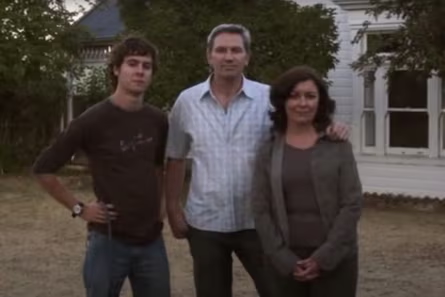
The credits sequence reveals that in all of Matthew’s faked ghost photos, Alice’s actual ghost was already present in different parts of the frame. He was doctoring images that were already legitimately haunted, which is a nice touch that raises the question: how did a photographer not notice this?
Here’s what Lake Mungo does well: it’s a thoughtful meditation on grief and the ghosts we carry - the memories and unfinished emotional business that haunt us after loss. The parallel experiences between Alice and June are effective. The uncertainty about what’s real versus fabricated creates some interesting ambiguity. The acting is solid across the board, with everyone selling the documentary format convincingly.
Here’s what it doesn’t do: function as horror. There are no scares. The pacing is glacially slow. The documentary format means spending long stretches watching people we don’t particularly care about discuss a tragedy in monotone voices. It’s structured like a true crime documentary about a drowning, and drowning victims don’t typically generate feature-length mysteries unless there’s more to the story - but the “more” here doesn’t arrive until the final act.
The sexual abuse subplot is shocking but goes nowhere, serving only as a dark revelation about Alice’s hidden trauma with zero resolution. The mysterious bruises on Matthew are mentioned once and never addressed again. The neighbor’s midnight break-in adds nothing. The film introduces ideas and abandons them, mistaking ambiguity for depth. And it’s slow. Staggeringly, exhaustingly slow. We both checked the runtime at the same point - 37 minutes left - and had the identical reaction of “what could they possibly do with 37 minutes that will matter?” This movie makes June 9, which we didn’t even like, look like a masterpiece of pacing by comparison. At least June 9 kept things moving and had some entertainment value, even if the entertainment was mostly laughing at its ridiculousness.
The fact that we nearly fell asleep watching this at 8 AM after a full night’s sleep says everything. One of us literally took a two-hour nap immediately after finishing it. That’s not horror - that’s a sedative.
We understand that horror comes in many forms. Slow-burn atmospheric dread is valid. Psychological horror about grief and loss is valid. But there has to be something to grab onto, some tension or build or payoff that justifies the crawl toward the ending. Lake Mungo has one effective scene - Alice seeing her dead self at Lake Mungo - and builds an entire film around it that never matches that moment’s impact.
This is a drama about a family processing grief, trauma, and the weight of secrets left behind. It’s occasionally touching. It’s well-acted. But calling it horror feels like a stretch, and calling it one of the scariest films ever made - as Jordan Peele apparently did - makes us question what horror movies he’s actually watching.
We’re giving Lake Mungo two and a half cents out of ten. Half a cent for the Lake Mungo revelation scene with Alice seeing herself dead, which genuinely worked. Half a cent for the videotape discovery, purely for shock value even though it goes nowhere. Half a cent for the parallel mother-daughter experiences, which showed some interesting ideas about grief even if underexplored. And one cent for the acting, which was professional and committed despite the glacial material.
If you’re looking for a slow, somber meditation on grief disguised as a ghost story, you might find something here. If you’re looking for horror - scares, tension, dread, anything that elevates your heart rate - you’ll be checking your watch wondering how much longer until something happens.
The scariest thing about Lake Mungo is realizing you still have 37 minutes left.