The Clovehitch Killer (2018): When Dad’s Hobby Isn’t Woodworking
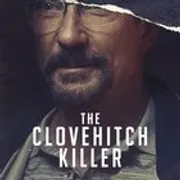
We need to talk about The Clovehitch Killer, a 2018 thriller that asks the question: what if your wholesome, Boy Scout leader dad had a really fucked up secret? Not like, “oh he’s having an affair” fucked up. More like “there’s a crawl space under the house and it smells weird” fucked up.
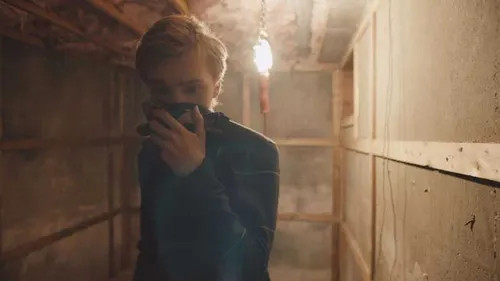
The movie follows Tyler Burnside, a teenage Boy Scout living in a small town still haunted by a serial killer who disappeared a decade ago. The Clovehitch Killerânamed for his signature knotâmurdered multiple women before the killings just… stopped. Tyler’s dad Don is the kind of guy who teaches knot-tying to scouts, makes terrible dad jokes, and insists the family spend every waking moment together doing wholesome Christian activities. He’s so aggressively normal it hurts.
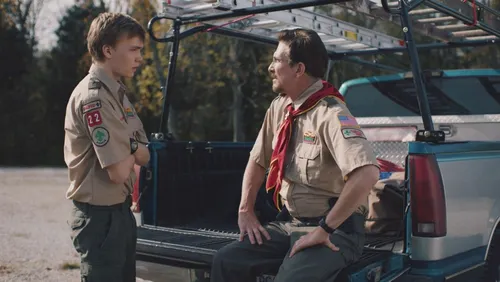
Then Tyler finds a Polaroid. A very specific, very disturbing Polaroid hidden in his dad’s truck. And suddenly, all that forced family bonding starts feeling a lot less cute.
The Obvious Reveal Here’s the thing: this movie shows its hand immediately. From the moment Don appears on screen with his squeaky-clean persona and his shed full of “woodworking projects,” you know. The film doesn’t really try to hide itâDon is obviously the Clovehitch Killer. It’s practically written on his face in the poster art. But instead of being a whodunit, The Clovehitch Killer becomes a psychological study of denial, family loyalty, and what happens when a kid realizes his whole life has been a performance. Tyler doesn’t want to believe it. He goes through elaborate mental gymnastics to convince himself there’s another explanation. His dad spinning increasingly absurd liesâ”It’s Uncle Rudy’s porn! We’re working out marital problems! She’s my affair partner and we’re just kinky!”âwould be funny if they weren’t so chilling. The gaslighting is relentless and genuinely well-acted by Dylan McDermott, who plays Don as a man constantly performing normalcy while his control slowly unravels.
When the Trophies Burn The movie’s most interesting turn comes when Don, trying to maintain his facade, agrees to burn his collection of bondage magazines, Polaroids, and victims’ driver’s licenses. Tyler thinks this resolves everything. His dad made a mistake protecting his creepy brother, they destroyed the evidence, problem solved. Except destroying a serial killer’s trophies doesn’t make the urges go awayâit just removes the outlet. What follows is Don desperately trying not to kill again, dressing himself up in women’s clothing and photographing himself in bondage scenarios, attempting to satisfy his compulsion without hurting anyone. It’s pathetic and horrifying and almost tragic. He’s clearly struggling. He doesn’t want to be this person. But he can’t stop.
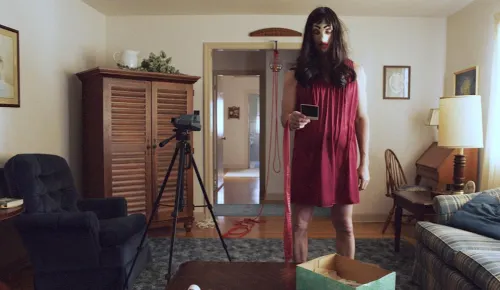
The scenes of Don falling apartâhis awkward conversation with a cop who clearly wants him to shut up, his failed attempt at sex with his wife, his three-year-old tantrum throwing Polaroids across the bedroomâshow a man whose entire identity is collapsing. When he finally gives in and stalks a new victim, it feels inevitable.
The Uncomfortable Truth The Clovehitch Killer forces you into this deeply uncomfortable position where you’re almost… sympathetic? Not to the murders, obviously. But to this man who seems genuinely torn between his love for his family and impulses he can’t control. The movie doesn’t excuse him, but it does humanize him in ways that make the ending hit harder. Because Tyler has to make an impossible choice. Turn in his dad and destroy his familyâhis mom, his little sister Susie, the entire community that revolves around this man’s reputation. Or handle it himself.
The film’s final act is tense and surprisingly quiet. No big confrontation. No dramatic confession. Just Tyler and his new friend Cassie (whose mother was one of the victims)
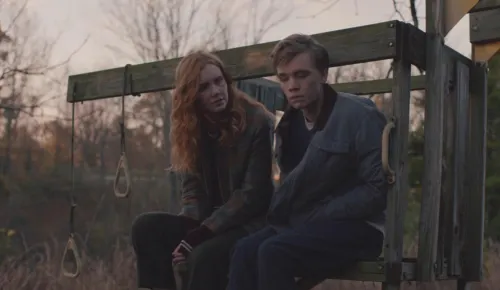
making a terrible decision in the woods. The movie cuts away before we see who pulls the triggerâTyler or Don himselfâbut it doesn’t really matter. Either way, Tyler has to live with it. Either way, Don is gone and the family is destroyed anyway, just more slowly.
What Works (And What Doesn’t) The lack of a traditional score is one of the film’s smartest choices. Instead of manipulating you with swelling strings or ominous drones, the silence lets you feel the movie on your own terms. The awkwardness lands harder, the tension builds organically, and you’re not being told when to be scared or sadâyou just are. It makes everything feel more real, more uncomfortable, like you’re witnessing something you shouldn’t be.
The editing can be choppy, jumping between day and night without transition, and some plot pointsâlike how Cassie knew about the crawl spaceâare never explained. But these feel like minor complaints in a film that otherwise nails its atmosphere of creeping dread.
What the film gets right is the queasy discomfort of realizing someone you trust is a monster. Tyler’s constant exhaustion (the kid never gets a full night’s sleep), his desperation to find another explanation, the way he briefly believes his dad when they’re doing dishes as a happy familyâit all rings true.
The movie also smartly avoids depicting the actual murders in graphic detail. We see Don’s ritual, his preparation, but the horror is mostly psychological. It’s about Tyler’s world imploding, not shock value.
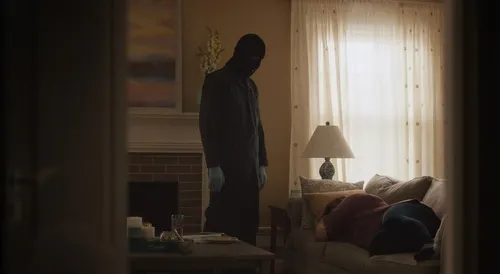
The Verdict The Clovehitch Killer isn’t perfect. It telegraphs its twist immediately and has some structural issues. But it commits fully to its central premise: what if the pillar of your community, the man who taught you everything about being a “good person,” was actually a serial killer? And what if you loved him anyway? It’s a quiet, deeply uncomfortable film that earns its dread through mundane family scenes and a great performance from McDermott as a man desperately trying to hold together a life built on lies. The ending doesn’t offer catharsisâjust the grim reality that some problems don’t have good solutions, only terrible choices and the people left to live with them. Six and a half cents out of ten. Worth watching if you like your horror psychological and your family dinners ruined forever.