The Stepfather (1987): Father Knows Best, Until Father Starts Killing Everybody
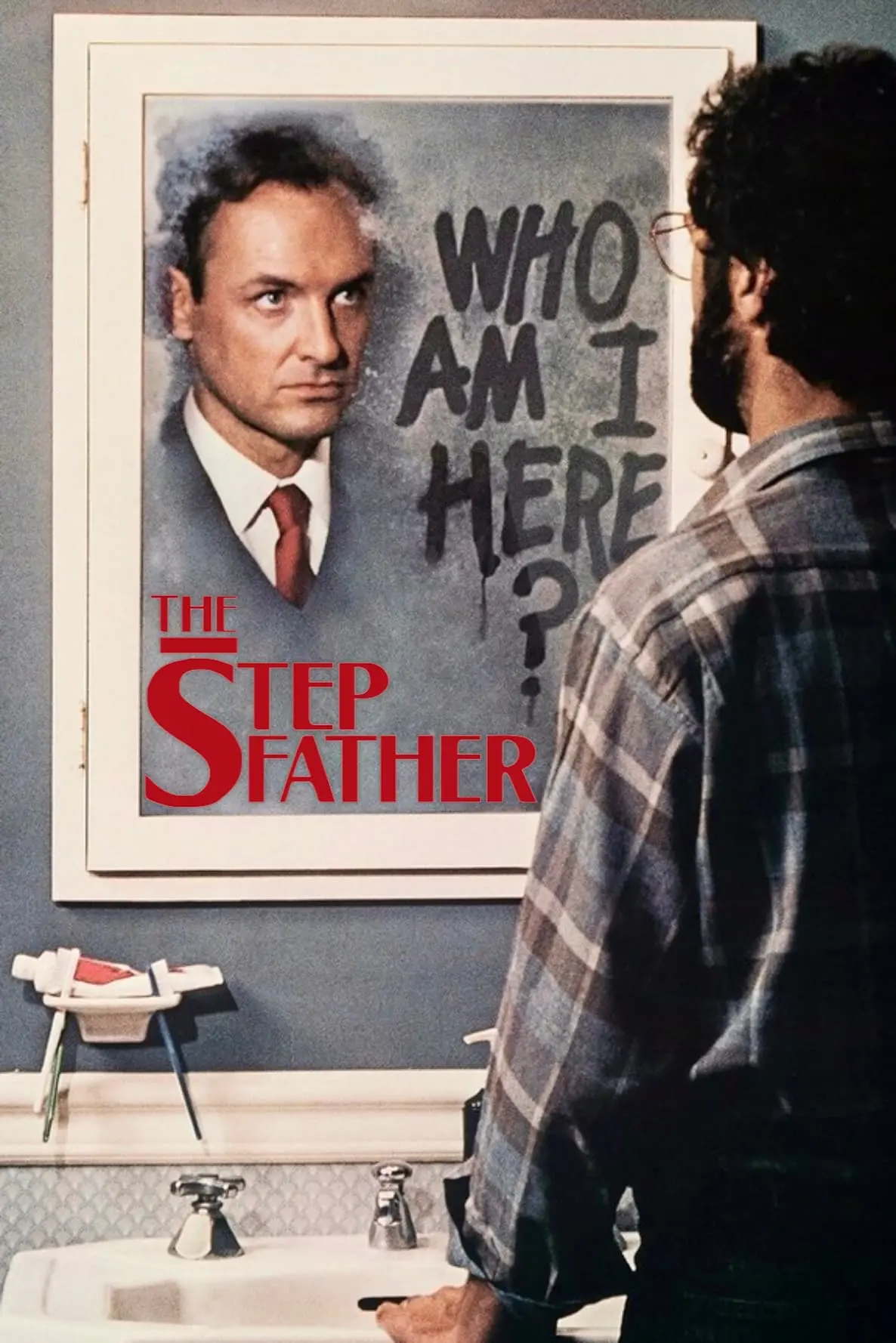
Some men want the perfect family.
Jerry Blake wants the perfect family so badly that if yours disappoints him, he will simply murder everyone, change his name, move to another suburb, and try again.
Very healthy. Very traditional. Very “home sweet home.”
A Fresh Shave and a Fresh Start
The Stepfather does not make us wonder who the killer is.
It opens in a quiet suburban neighborhood, the kind where kids still deliver newspapers on bicycles and every lawn looks suspiciously respectable. Inside one of those houses, a bearded man stands in front of a bathroom mirror covered in blood.
He showers, shaves, trims his hair, puts in contacts, changes into a sweater-vest-and-tie ensemble, and transforms himself from “possibly hiding from the FBI” into “would you like to discuss your mortgage options?”
Then he walks downstairs.
The house is a slaughterhouse. His wife and children are dead, furniture is overturned, blood is everywhere, and somehow one of the things that bothers him is a chair being out of place. He calmly sets it upright before leaving.
Priorities.
He takes a ferry, dumps the suitcase containing his old identity into the water, and disappears.
That choice changes the entire kind of suspense the movie is chasing. We are never waiting to discover whether this man is dangerous. We already watched him leave a dead family behind. The tension comes from wondering how long he can maintain his cheerful suburban disguise before somebody in his new life realizes what is underneath it.
One year later, Henry Morrison has become Jerry Blake, a real estate agent married to widow Susan Maine. Susan adores him. Her sixteen-year-old daughter, Stephanie, is considerably less enthusiastic.
We meet Stephanie riding her bike home, where Susan is outside raking a truly unreasonable number of leaves. Mother and daughter are laughing and throwing them at each other until Jerry arrives, and Stephanie’s mood immediately changes.
Jerry has brought her a puppy, clearly hoping one adorable dog might help win her over. Stephanie loves the puppy, but when Jerry touches her arm and calls her “my girl,” she flinches and pulls away.
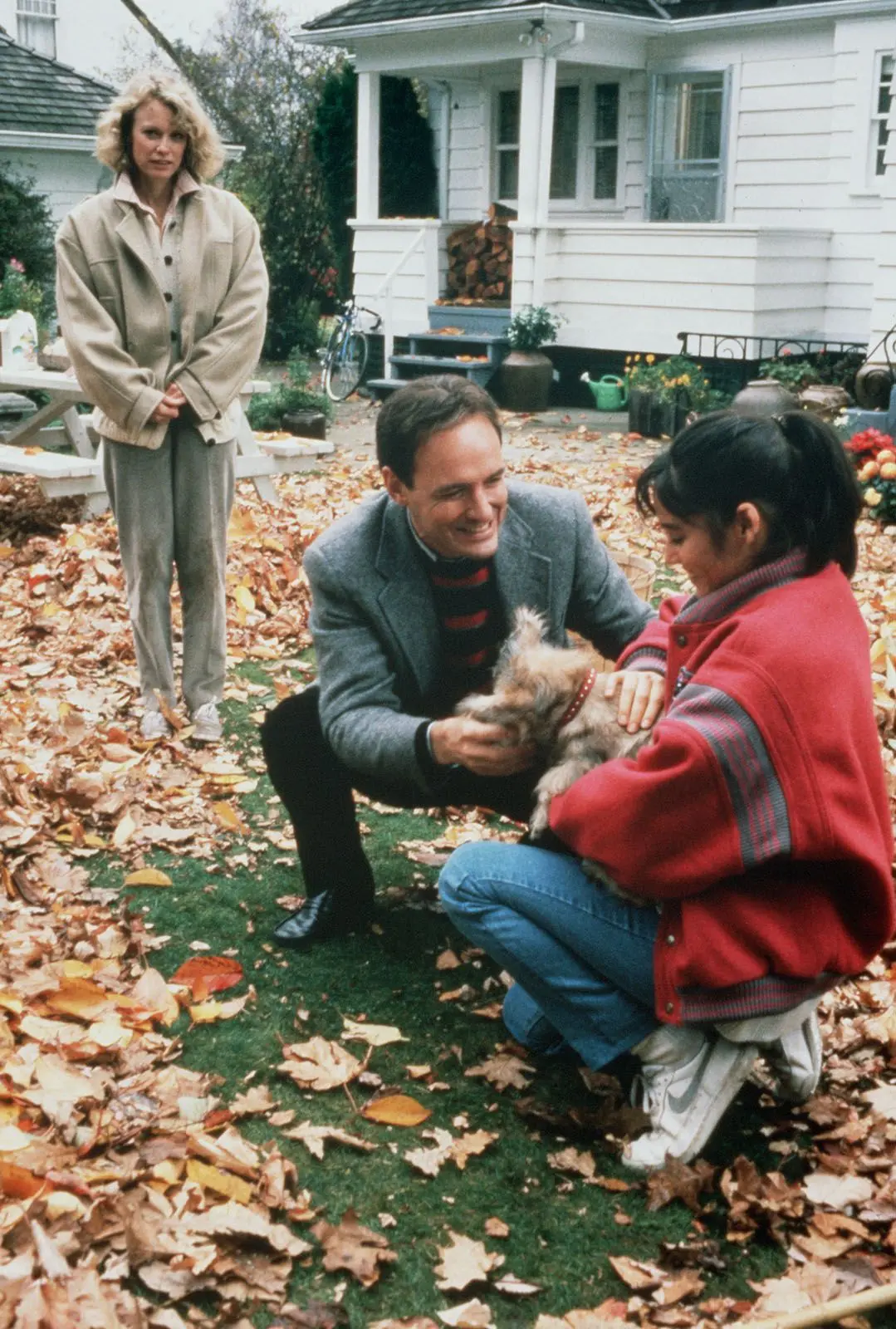
Now the conflict inside Jerry’s new family is clear. Stephanie does not know what he has done, but something about him feels wrong to her. We know her instincts are considerably better than she realizes.
Stephanie is still grieving her father, who died only about a year earlier, and she resents the stepfather who arrived in his place with impressive speed.
Susan’s recovery timeline also raised some questions for us. Her husband dies, she believes she will never love again, and apparently somewhere between that thought and the next commercial break she meets Jerry, marries him, and moves right along.
Grief is personal.
Susan is efficient.
Scary Jerry Wants a Sitcom Family
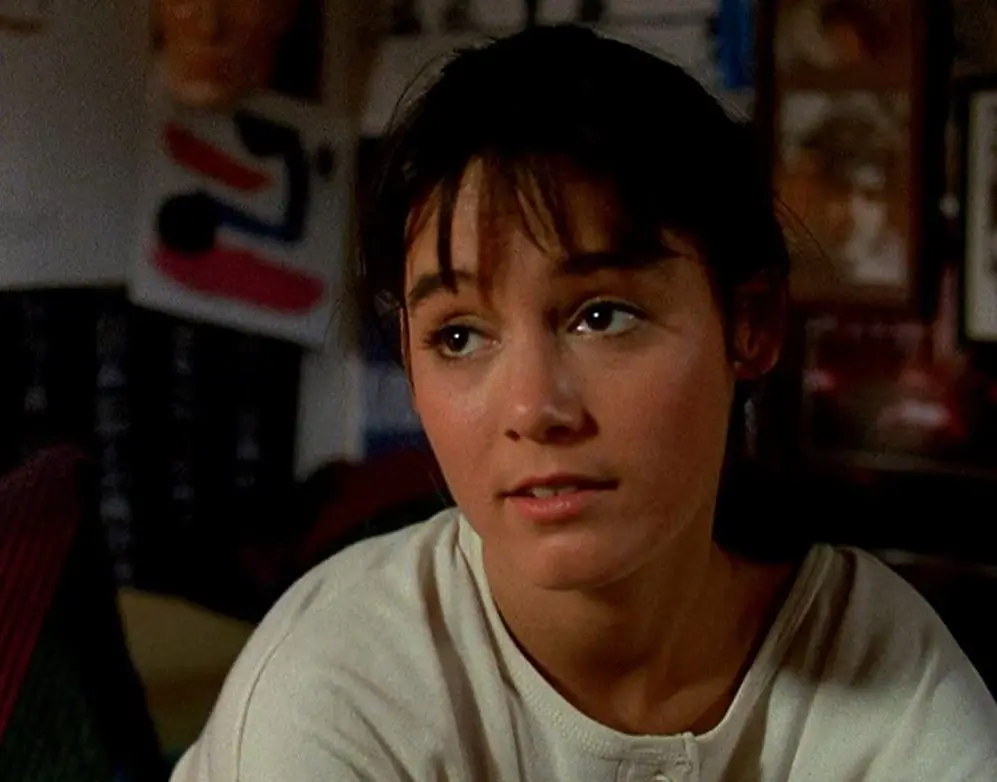
Stephanie is already struggling at school. She has been suspended repeatedly and sees psychiatrist Dr. Bondurant, with whom she has an easy, joking relationship. She tells him that losing her father was hard enough without gaining Jerry.
Then she gets into a full-on fight in art class and is expelled.
Jerry and Susan are surprisingly calm about this. Stephanie asks to attend boarding school, but that bothers Jerry much more than the expulsion itself.
A family, he explains, needs children.
“Father knows best.”
And that tells us nearly everything we need to know about Jerry.
His idea of family does not involve accepting actual people with actual personalities. He wants a television family. Dad works. Mom smiles. Daughter gets straight A’s. Everyone appreciates Thanksgiving properly. Nobody questions Father.
Jerry’s fantasy leaks out while he is showing a house to another family. He tells their little girl about his daughter, then accidentally calls her Jill instead of Stephanie and describes her as a straight-A student on the student council.
Stephanie is neither of those things.
Jerry is not describing the daughter he has.
He is describing the daughter he ordered.
Meanwhile, Susan tries to convince Stephanie to give him a chance. She genuinely loves Jerry and believes he wants to take care of them. Stephanie admits she is trying, but there is something about him she cannot shake.
That same evening, Susan asks Jerry about his childhood and past.
He gives her nothing.
The past, he says, is basically irrelevant. What matters is now.
That philosophy is very convenient when your past includes several corpses and a suitcase at the bottom of a lake.
Maybe They Disappointed Him
Elsewhere, Jim Ogilvie is trying to find the man Jerry used to be.
Jim is the brother of Jerry’s murdered previous wife, and unlike almost everyone else connected to that massacre, he remains strangely interested in solving it.
A reporter reluctantly runs a follow-up story. Men at Jerry’s neighborhood barbecue complain that the newspaper is dredging the case up again, as though an unsolved family massacre is some tacky celebrity divorce everybody should really move past.
One of them wonders what could make a man kill his whole family.
Jerry answers, “Maybe they disappointed him.”
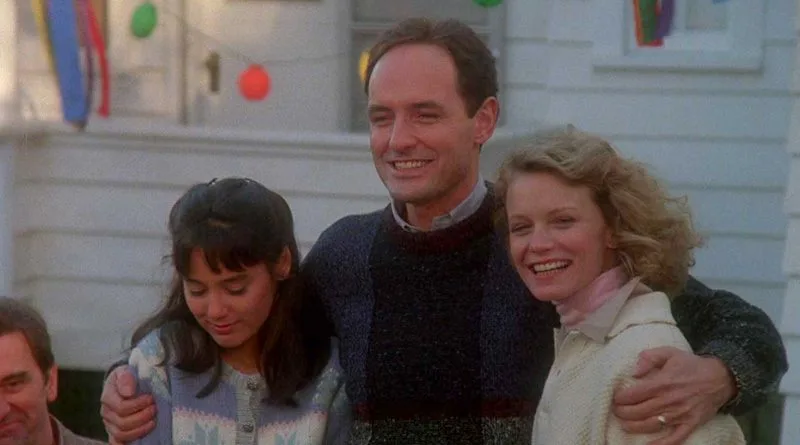
Nobody stops chewing.
Nobody slowly puts down a potato salad spoon and asks Jerry to elaborate.
Nothing.
Stephanie later finds the article, and the timing is excellent because she has just seen Jerry lose his shit in the basement.
He thinks he is alone and starts pounding on his workbench, raging about order, family, being a good boy, and keeping everyone together. Then he sees Stephanie.
Instant transformation.
The wild-eyed lunatic disappears and Cheerful Dad returns.
Jerry explains that salesmen always have to be “on,” and sometimes he needs to blow off steam.
Stephanie now has something more than teenage resentment. She writes to the newspaper asking for a photograph of Henry Morrison.
Unfortunately, Jerry gets the mail first.
He opens the envelope, sees his old face, has another basement meltdown, replaces the photograph with one of another man, and lets Stephanie receive the altered package.
She thinks she was wrong.
Do Not Psychoanalyze the Realtor
Dr. Bondurant is less convinced.
Stephanie tells him Jerry genuinely scares her, and Bondurant agrees to speak with him. Jerry wants no part of that conversation, so Bondurant takes the extremely questionable professional route of pretending to be a homebuyer.
He arranges for Jerry to show him a house.
Then he deliberately pokes at Jerry’s worldview, dismissing marriage, domestic life, and the whole “home sweet home” routine while watching for a reaction.
Jerry is visibly irritated but holds himself together.
Until Bondurant slips.
He has already claimed to be a confirmed bachelor, then casually mentions his wife.
Jerry catches it immediately.
Bondurant tries covering by saying he is recently divorced.
Then Jerry beats him to death with a piece of lumber.
Therapeutic boundaries have officially collapsed.
Jerry stages Bondurant’s death as a fiery car accident, then goes home and personally tells Stephanie her psychiatrist has died.
Stephanie breaks down and hugs him.
Jerry comforts her and tells her Bondurant brought them closer together.
Which, technically, he did.
Just not in the way he intended.
For a little while, Jerry finally has what he wants. Stephanie apologizes for the trouble she has caused. They install Jerry’s newly built birdhouse together. Susan is delighted. Jerry is delighted. Even Stephanie appears willing to start over.
Then Thanksgiving arrives, and Jerry announces that he never understood the true meaning of the holiday until this family.
Dan pointed out that his last family may simply have failed Thanksgiving.
Maybe that was it.
Wrong cranberry sauce. Not enough gratitude. Entire household eliminated.
Talon, meanwhile, was distracted by Susan’s outfit, which looked less like Thanksgiving dinner and more like a woman named Prudence dressing as a pilgrim.
While Jerry carves turkey, Jim’s search finally gets traction. A magazine listing ideal American towns points him toward Oak Ridge, and public marriage records give him a list of recent newlyweds. Earlier, police had already told him that Henry Morrison’s identity was fabricated and likely part of a larger pattern.
Their practical advice is essentially: we cannot find him, so maybe buy a gun.
Jim does.
His shooting stance looks like he is trying to use a public restroom without touching the seat, but at least he is armed.
One Kiss Ruins the American Dream
The peace does not last.
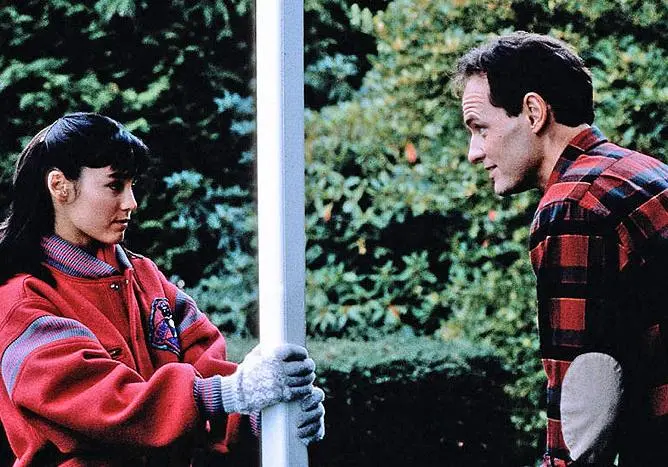
Stephanie accepts a ride home from her classmate Paul, and the two share a kiss at the front door.
Jerry erupts.
He charges outside, accuses Paul of practically raping his daughter, and drives him away.
Paul is sixteen.
Stephanie is sixteen.
They were kissing.
Nobody was storming Normandy.
When Susan initially defends Jerry, Stephanie finally says what she has felt all along: he is not her father. He is her stepfather, and she cannot understand how Susan can even let him touch her.
Susan slaps her.
Then immediately turns on Jerry for destroying all the progress they had made.
That is all Jerry needs.
His perfect family is ruined.
So, like any emotionally healthy adult, he begins replacing them.
Jerry quits the real estate agency without telling Susan and travels by ferry to another town, changing his appearance along the way. Off comes the hairpiece. On goes a mustache and glasses. Jerry Blake starts becoming Bill Hodgkins.
He gets an insurance-sales job, rents an apartment, and, most importantly, meets a single mother with children.
New family loading.
Meanwhile, Jim starts working his way through the Oak Ridge marriage list door to door, crossing off one new husband after another while Jerry quietly builds his replacement life.
Wait a Minute. Who Am I Here?
Jim’s search eventually leads him to Jerry’s house.
Jerry is not home, so Jim talks briefly with Susan and leaves without explaining why he is really there.
Susan later calls Jerry’s real estate office to tell him someone came looking for him.
That is when she discovers Jerry has been lying.
He quit days ago.
When Jerry gets home, she confronts him.
At first he tries blaming a new receptionist. Then his identities collide.
“Hodgkins,” he snaps while arguing.
Susan freezes.
Jerry freezes.
Then comes the movie’s best moment.
He looks genuinely lost and asks, “Wait a minute. Who am I here?”
Susan answers him.
Jerry Blake.
And for one bizarre second, he almost seems grateful for the reminder.
Then he hits her with the telephone, follows her into the basement, and knocks her down the stairs.
This is where Terry O’Quinn makes the entire movie work.
Jerry does not simply pretend to be nice. He can move from loving husband to homicidal maniac and back again so quickly that it feels as though both versions are completely sincere while they exist.
Talon remembered O’Quinn primarily from The Stepfather long before Lost, and this performance is exactly why. Jerry’s syrupy family-man persona is almost as unsettling as his rages because you can feel how desperately he needs the fantasy to be real.
Assuming Susan is dead, Jerry chooses a kitchen knife and prepares for Stephanie.
The dog whimpers.
For one horrible second, we thought the movie was going there.
Jerry instead pets the dog.
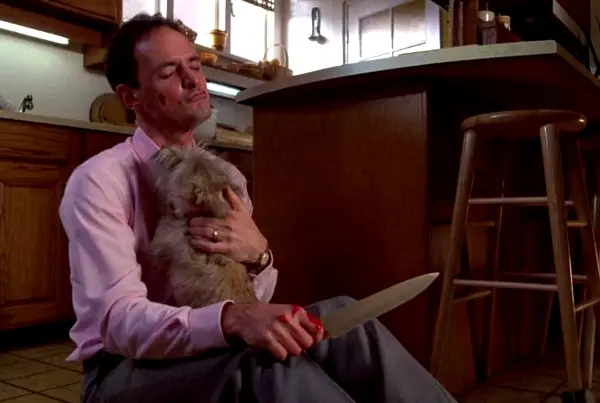
Good.
Murder the therapist. Murder Jim. Attempt to murder your wife and stepdaughter.
Leave the dog out of it.
Home Sweet Home Finally Falls Apart
Jim arrives before Jerry can reach Stephanie.
Unfortunately, all that shooting-range practice does him absolutely no good. He recognizes Jerry, fumbles for the gun, and gets repeatedly stabbed before he can use it.
Stephanie is upstairs when Jerry comes for her.
She locks herself in the bathroom. He smashes through the door. She grabs a conveniently perfect shard of broken mirror and stabs him in the arm before escaping into the attic.
The attic contains enough furniture, bicycles, birdcages, and assorted household debris to suggest the house may have been constructed around a yard sale.
Jerry somehow squeezes through the tiny access opening after her.
He follows Stephanie through the rafters, insisting that everything is fine and they are basically just playing.
Normal father-daughter bonding.
Eventually the attic floor gives way and Jerry crashes through the ceiling into the bathroom below.
Downstairs, Jerry grabs Stephanie, but Susan has Jim’s gun.
She shoots Jerry.
He keeps coming.
Her second shot misses. The third hits his leg.
He still keeps coming.
Apparently Jerry’s commitment to traditional family values includes refusing to die until everyone has finished the argument.
The knife lies near the top of the stairs. Jerry crawls toward it. Stephanie reaches it first, and after a struggle she drives it into his chest.
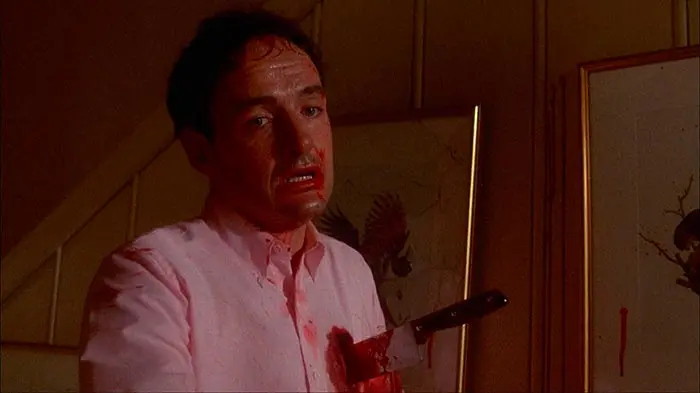
Jerry stands there for one last moment.
“I love you.”
Then he falls backward down the stairs.
Later, the neighborhood is quiet again.
Susan survives. Stephanie survives. The dog survives, which is the important administrative detail.
And Stephanie takes a saw to Jerry’s birdhouse.
The little replica of his perfect home comes down piece by piece.
Family meeting adjourned.
The Verdict
We both landed in almost exactly the same place with The Stepfather.
Dan liked it more than he expected to. For an ’80s horror movie made without a massive budget, he thought it was well constructed and appreciated how often the story eventually explained things that initially looked like possible plot holes.
His biggest problem is the decision to reveal Jerry immediately.
Because we watch him walk away from his murdered family in the opening minutes, there is never any mystery about Stephanie’s instincts. She is right. We know she is right. We are simply waiting for everyone else to catch up.
Dan thought the movie might have generated more tension by introducing Jerry as the seemingly perfect stepfather first and revealing the earlier massacre gradually through flashbacks as his behavior began to crack.
Talon agreed that the movie could have created more tension around Stephanie. Jerry is so beloved and respectable that the story had an opportunity to let her become increasingly frightened while everyone around her dismissed what she was seeing.
Instead, much of the movie plays as a relatively restrained psychological slow burn until Jerry finally abandons the family fantasy altogether.
Still, Talon enjoyed revisiting it. She remembered loving The Stepfather as a kid, and although it was not quite as great as childhood memory had preserved it, the central performance still holds up.
That is the real reason the movie works.
Terry O’Quinn makes Jerry terrifying not because he is constantly violent, but because he genuinely seems happiest when pretending to be Ward Cleaver. He does not want money, revenge, or power.
He wants the perfect wife, the perfect child, the perfect house, the perfect birdhouse and the perfect Thanksgiving.
And if one of you screws it up, he can always get another family.
Talon gives The Stepfather 7 cents out of 10.
Dan also gives it 7 cents out of 10.
So maybe Father does know best.
Just make sure he remembers which father he is before you hand him the carving knife.