Villains (2019): When You Break Into the Wrong Damn House

There are certain things you should probably understand before beginning a life of crime.
How to open a cash register.
How to keep track of your gas tank.
How to steal a vehicle without wandering through every room of the house except the garage.
Mickey and Jules have mastered none of these skills.
And that is exactly why Villains works.
The 2019 horror comedy follows two extremely affectionate, moderately drug-addled criminals whose dream of escaping to Florida is interrupted when they break into the home of George and Gloria—a polite suburban couple with impeccable manners, deeply concerning parenting practices, and a much firmer grasp on criminal activity.
The title may be Villains, but the label becomes increasingly relative.
The World’s Most Polite Armed Robbery
Mickey and Jules enter the movie by robbing a convenience store in animal masks. Mickey wears a pigeon. Jules wears a unicorn. Neither one projects the level of intimidation normally expected from an armed robbery.
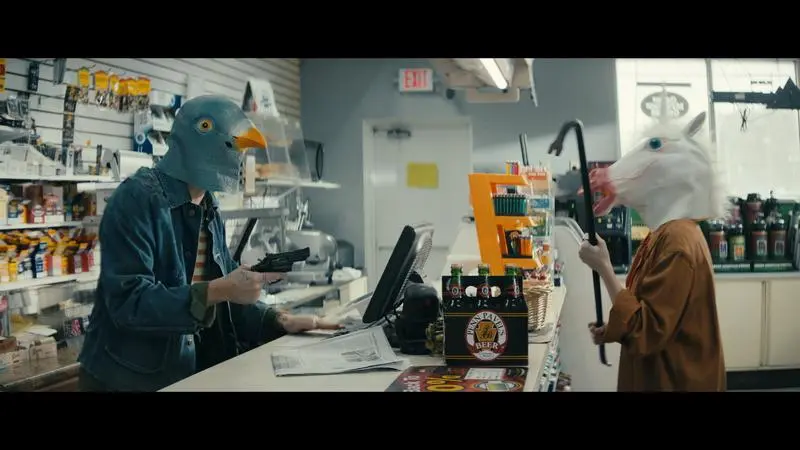
Things deteriorate when Mickey cannot open the cash register.
The cashier eventually has to help by suggesting Mickey buy something so the drawer will open. It is difficult to dominate a room once your hostage has become technical support, but Mickey remains committed to the performance.
On the way out, Jules realizes she forgot to threaten the cashier and runs back inside to correct the oversight.
They are not good at this.
They are, however, completely in love.
Mickey and Jules have the same chaotic outlaw-couple energy as Pumpkin and Honey Bunny from Pulp Fiction, except with less menace and considerably worse planning. Jules thinks everything Mickey does is brilliant. Mickey describes her as a sexual Tyrannosaurus rex. They encourage each other’s worst ideas with the unwavering support usually reserved for healthy relationships and pyramid schemes.
By the time Mickey finishes retelling the robbery, he has transformed himself into Scarface. In reality, he struggled with a cash register and dropped the groceries.
Then their car stops.
Mickey announces that it must have broken down, but Jules checks the gauge and discovers they are out of gas.
They have just robbed a gas station.
The dream is Florida, where they plan to sell seashells on the beach despite having no apparent business model beyond Mickey’s belief that people enjoy shells. Before they can begin this exciting new chapter in coastal retail, they need another car.
A secluded house nearby appears to solve that problem.
It does not.
Apparently the Garage Is Lava
Mickey and Jules force their way into the house and begin searching for keys.
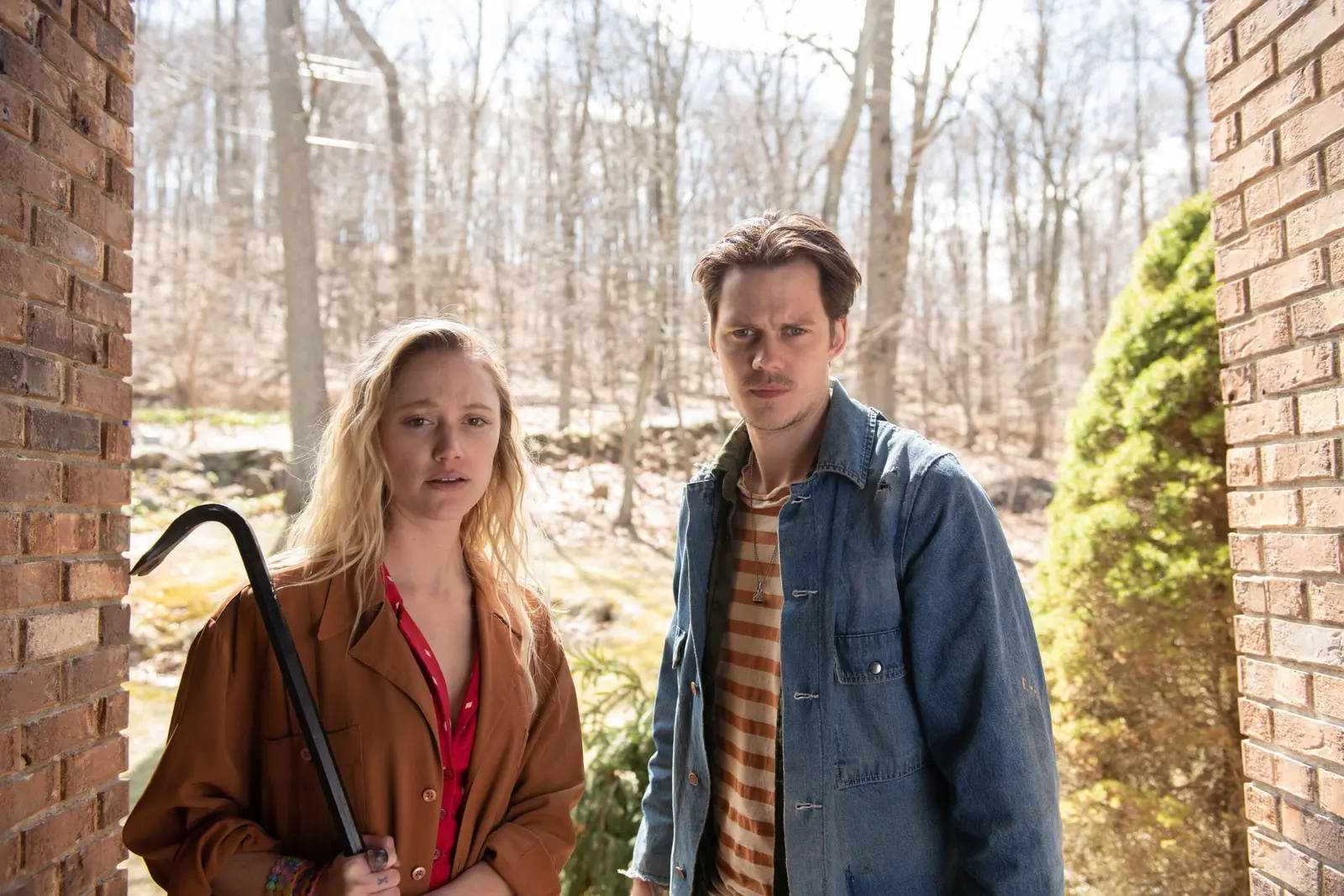
The place looks ordinary. Quiet. Expensive enough to contain something worth stealing. There is even a camcorder with footage of bound and gagged people, which would cause most burglars to reconsider the property.
Mickey and Jules barely register it.
They eat the homeowners’ food, take cocaine for a “creative boost,” and continue searching through the house. Their plan is to siphon gas from a vehicle, although neither of them bothers checking the garage where a vehicle would most likely be found.
Apparently the garage is lava.
Mickey eventually heads into the basement, where a Billy Bass and a child’s tricycle establish that whoever lives here has either kidnapped a child or opened a deeply unsettling thrift store.
Then he finds the little girl chained to a pipe.
Her name is Sweetiepie.
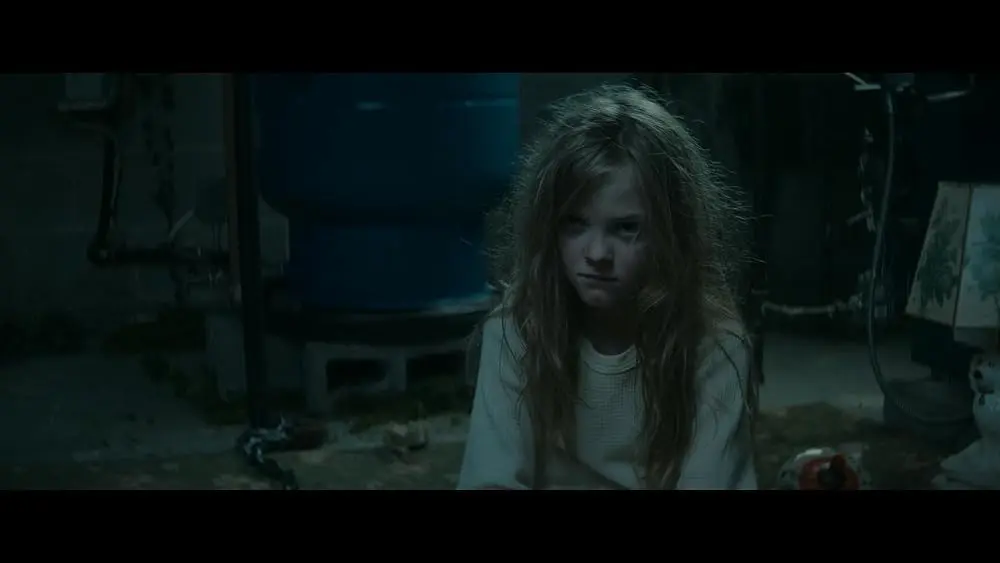
Jules immediately wants to free her. Mickey initially argues that they should leave before the homeowners return, which is morally disappointing but consistent with the survival instincts of someone who has finally noticed that this robbery may be more complicated than expected.
Jules insists they cannot abandon a child in a basement.
Mickey agrees.
That is the strange charm of these two. They rob stores, wave a gun and a crowbar at people, use cocaine as a brainstorming tool, and break into houses—but when confronted with something genuinely evil, they recognize it. Eventually.
Before they can rescue Sweetiepie, the homeowners appear.
Meet George and Gloria
George and Gloria appear to have escaped from a 1950s television show.
George is calm, neatly dressed, and unfailingly courteous. Gloria smiles like a woman who has never encountered an unpleasant emotion that could not be hidden beneath a casserole. Together, they project the warm domestic energy of people who might invite you inside for pie and then quietly add poison to it.
George discovers Mickey and Jules and responds to the home invasion with remarkable composure.
He offers them money. He offers them the car. He is willing to overlook the damaged door and pretend none of this ever happened.
There is only one condition.
They must leave Sweetiepie behind.
George explains that she is their daughter. This raises questions, particularly because their daughter is chained in the basement and bites Mickey hard enough to briefly convince us she might be a vampire.
Mickey tries to accept George’s offer, but Jules refuses. When Mickey appears willing to abandon the girl, he gives her an exaggerated wink to show that he does not mean it.
Apparently a wink is the universal sign for “please disregard the horrible thing I just said while being threatened with a knife.”
The situation escalates. George knocks Mickey unconscious while Gloria restrains Jules in the basement. Mickey wakes tied to a bed upstairs, alone with Gloria.
This is where the charming suburban façade begins coming apart.
Mommy Has Some Issues
Gloria changes into a black wig and purple dress before visiting Mickey in the upstairs bedroom. Her behavior shifts from cheerful hostess to something overtly sexual and deeply uncomfortable, and she insists that he call her Mommy.
Mickey does not enjoy this.
Nobody enjoys this.
Gloria shows Mickey old photographs that include a boy named Ethan, whom she describes as her son. Later, when Jules escapes through the laundry chute and reaches the nursery, she discovers why Ethan never gets older.
He is a porcelain doll.
George explains that Gloria desperately wanted a child, but the couple could not have one. He has constructed an elaborate fantasy in which the doll is their son and the kidnapped girl in the basement might eventually become their daughter. When Sweetiepie fails to make Gloria happy, George does not return her, seek help, or acknowledge that kidnapping was perhaps a flawed solution.
He chains her downstairs.
George’s approach to marital problems is apparently “commit a felony and see if that helps.”
After Mickey plays along with Gloria long enough to escape, George shoots him in the leg and chains him in the basement with Jules. Jules eventually gets free and uses Ethan as leverage, threatening to drop the doll unless George releases Mickey. Gloria shoots at her, causing Jules to drop Ethan. His porcelain head shatters on the floor.
Gloria collapses beside the pieces, devastated.
And now everybody is going to dinner.
Nothing Says Family Like Drugged Shepherd’s Pie
Mickey and Jules find themselves duct-taped to chairs while Gloria cooks an enormous meal.
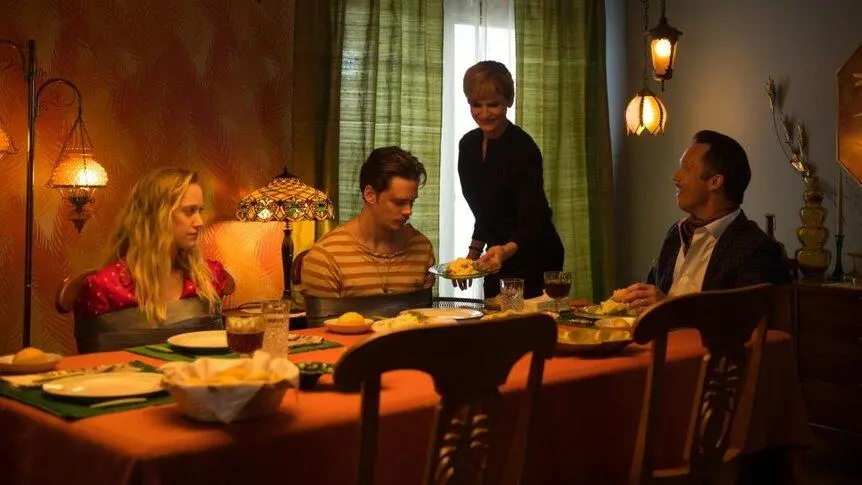
George explains that cooking helps Gloria manage stress. A small frustration might produce something modest. A coffee spill apparently results in a Bundt cake.
Mickey and Jules have broken into the house, discovered the kidnapped child, escaped confinement, and destroyed Gloria’s porcelain baby.
They have summoned a banquet.
During dinner, George calmly explains that he and Gloria intend to stage Mickey and Jules’ deaths as accidental overdoses. It is disturbingly practical. They already have the drugs, the couple has an established criminal history, and nobody is likely to question why two burglars died inside a house they entered illegally.
It is actually a pretty good plan.
Unfortunately for George, a police officer investigating the convenience-store robbery arrives and notices the damaged front door. George smiles through the entire conversation with a gun behind his back while Mickey and Jules remain hidden inside.
The officer eventually leaves without finding them, because law enforcement in this movie possesses roughly the same investigative instincts Mickey and Jules brought to the garage.
Meanwhile, Jules wakes from the sedatives and discovers their cocaine nearby.
There are very few situations in life where cocaine becomes the responsible choice.
This may be one of them.
She uses it to wake herself and Mickey, and the two create the least convincing escape illusion imaginable before hiding behind thin curtains. Their silhouettes remain clearly visible.
It is the strategy of a five-year-old who covers their face and assumes the rest of their body has become invisible.
And it works.
The Slowest Garage Door in Human History
Mickey and Jules retrieve Sweetiepie and finally locate the car.
In the garage.
Who could have anticipated that?
They climb inside, hit the opener, and wait for the door to rise with all the urgency of a glacier considering a career change.
George and Gloria have enough time to search the woods, argue about their marriage, reconcile, return to the house, and discover the escape before Mickey and Jules can drive approximately twelve feet.
Maybe the garage door is powered by a tired hamster.
When it finally opens, George is standing outside with a gun.
Mickey tells Jules he loves her. He orders her to duck and floors the car, slamming into George and crashing into a tree.
For a moment, it appears they have escaped.
Then Jules realizes Mickey has been shot.
For all their stupidity, drugs, robberies, and questionable business planning, Mickey and Jules genuinely love each other. That has never been a joke, and Mickey’s death lands harder than expected because the movie has spent so much time making their relationship ridiculous without making it insincere.
George survives being hit by the car and begins choking Jules, because murderous suburban fathers are apparently manufactured to different specifications.
Then a gun clicks behind him.
Sweetiepie is holding it.
George immediately returns to his gentle father voice. He suggests that Sweetiepie give Daddy the gun. Perhaps they can have mint ice cream.
Sweetiepie shoots him directly between the eyes.
So much for mint ice cream.
The girl finally speaks and tells Jules she wants to go with her.
Before leaving, Jules gives Mickey one last “car wash,” brushing her hair across his face as she did earlier on the road. It is affectionate and heartbreaking.
It is also a woman straddling her dead boyfriend and rubbing her hair on him.
Villains contains multitudes.
Gloria emerges with suitcases, sees George’s body, and decides he is merely resting. She cheerfully talks about the wonderful adventures they are going to have together while attempting to bring her dead husband along.
Jules lowers the gun.
There is no need to shoot Gloria.
Gloria is somewhere else entirely now.
Possibly in 1957.
Possibly on another planet.
Florida, Finally
Jules and Sweetiepie eventually reach Florida, where they open the seashell stand Mickey imagined.
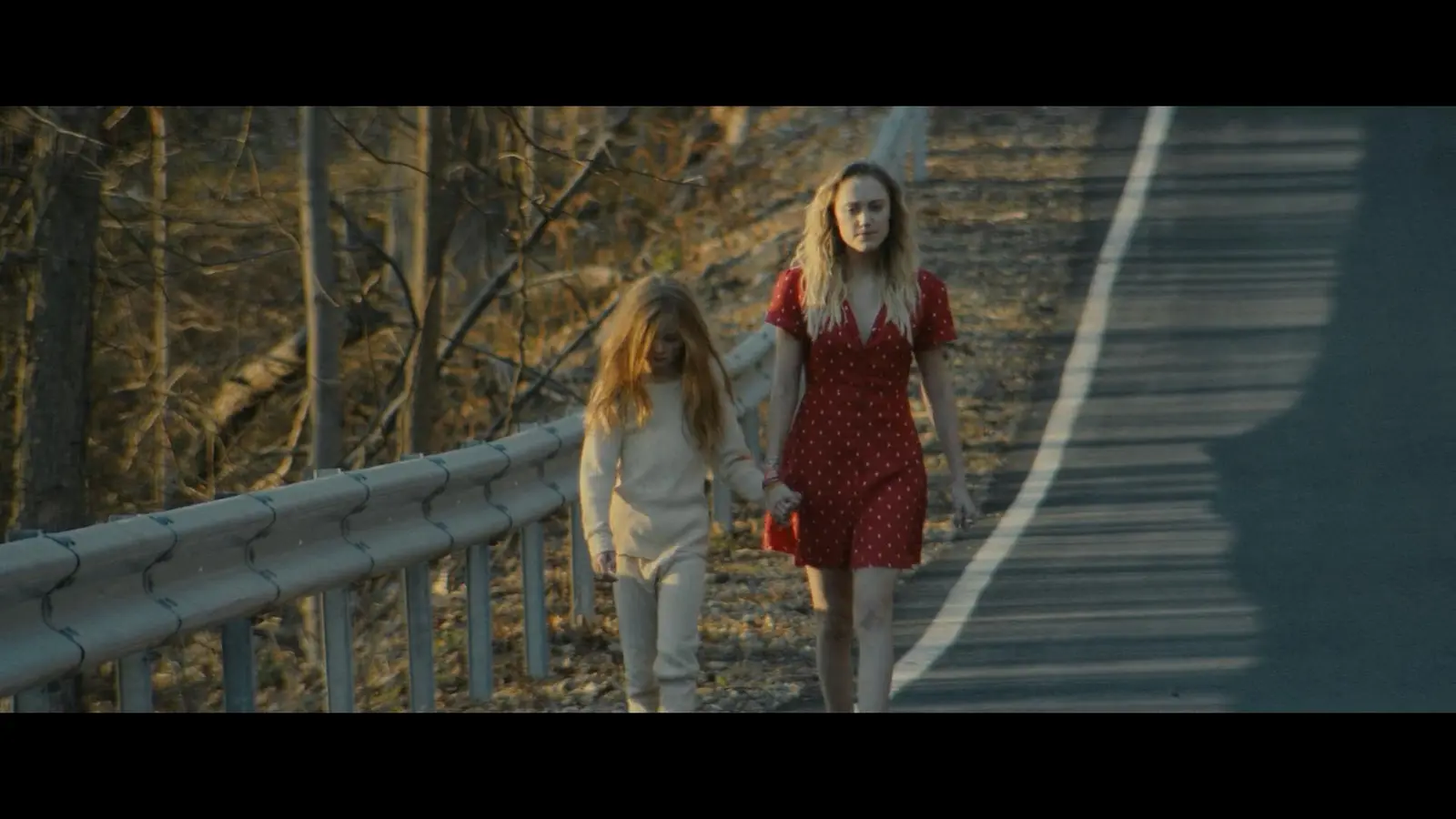
It is an unexpectedly warm ending for a movie involving kidnapping, forced overdoses, porcelain-child grief, and a convenience-store robbery committed by a unicorn and a pigeon.
We do have questions.
How is Jules explaining Sweetiepie? Does this previously missing child have identification? Is anyone enrolling her in school? Does nobody find it suspicious that Jules arrived in Florida with an abducted girl and immediately opened an unlicensed seashell business?
Apparently not.
Florida has seen stranger things.
The ending matters because it completes the movie’s central reversal. Mickey and Jules begin as the criminals, but they are also strangely innocent. They are loud, impulsive, messy, and completely alive. They love one another without embarrassment and ultimately risk everything for a child they do not know.
George and Gloria are their opposite.
They are polite, wealthy, well dressed, married, and domestic. They look like the safest people in the movie. They are also kidnappers who keep a child chained in the basement and calmly discuss murdering two people over shepherd’s pie.
That contrast was our favorite part of the film.
Even the relationships mirror one another. Mickey and Jules are still in the stage where everything the other person does is adorable. Every terrible idea receives enthusiastic support. George and Gloria clearly love each other too, but their relationship has hardened into something darker. George spends the entire movie maintaining Gloria’s fantasy world rather than confronting her psychological problems.
Dan especially liked that element. George and Gloria seem trapped in an artificial version of an era when mental illness was hidden, ignored, or explained away. George responds to Gloria’s delusions by continually rearranging reality around them.
Baby Ethan is real because Gloria needs him to be real.
Sweetiepie becomes their daughter because Gloria wants a child.
Sweetiepie goes into the basement when the fantasy stops working.
George does not fix anything.
He just keeps adjusting the scenery.
Jeffrey Donovan and Kyra Sedgwick make George and Gloria absurd without ever making them harmless. Their behavior is funny because of how calmly they present it, but the danger remains real. They are better organized than Mickey and Jules, better at manipulation, and much more comfortable with murder.
The title does not ask whether the movie contains villains.
It asks which ones are worse.
The Verdict
We both came out of Villains pleasantly surprised.
It is not especially scary in the traditional sense, but being kidnapped, chained in a basement, drugged, and prepared for a staged overdose seems sufficiently horrific for most people.
The movie works because it understands its tone. It never becomes a full comedy, but it also never pretends that a story featuring cocaine resuscitation, a Billy Bass jump scare, a porcelain baby, and two criminals hiding visibly behind curtains needs to take itself completely seriously.
There are things we could question.
Nobody searches the damn garage. Jules temporarily becomes Spider-Man to climb a laundry chute. The curtain hiding place is ridiculous. The final escape takes so long that George can hike through the woods, repair his marriage, and return home before the garage door finishes opening.
But the movie is entertaining enough that none of it matters very much.
Talon gives Villains eight cents out of ten. The chemistry between the characters, the dark comedy, and especially the contrast between the two couples make it an easy movie to enjoy. It is fun without being empty, strange without trying too hard to be strange, and genuinely affectionate toward its two hopeless criminal idiots.
Dan lands in almost exactly the same place, wavering between seven and a half and eight cents before settling around eight. The humor is a pleasant surprise, the relationships give the story more personality than expected, and there simply is not much here to seriously complain about.
So Villains gives us four criminals, two love stories, one kidnapped child, one porcelain baby, an absurd amount of cocaine, and a surprisingly strong argument that the people breaking into your house might not be the ones you should fear.
Sometimes the worst possible house to rob is the one where the homeowners are better at crime than you are.